RF Guru
Bias-T 75Ω 10 KHz - 1.5 GHz
Bias-T 75Ω 10 KHz - 1.5 GHz
Couldn't load pickup availability
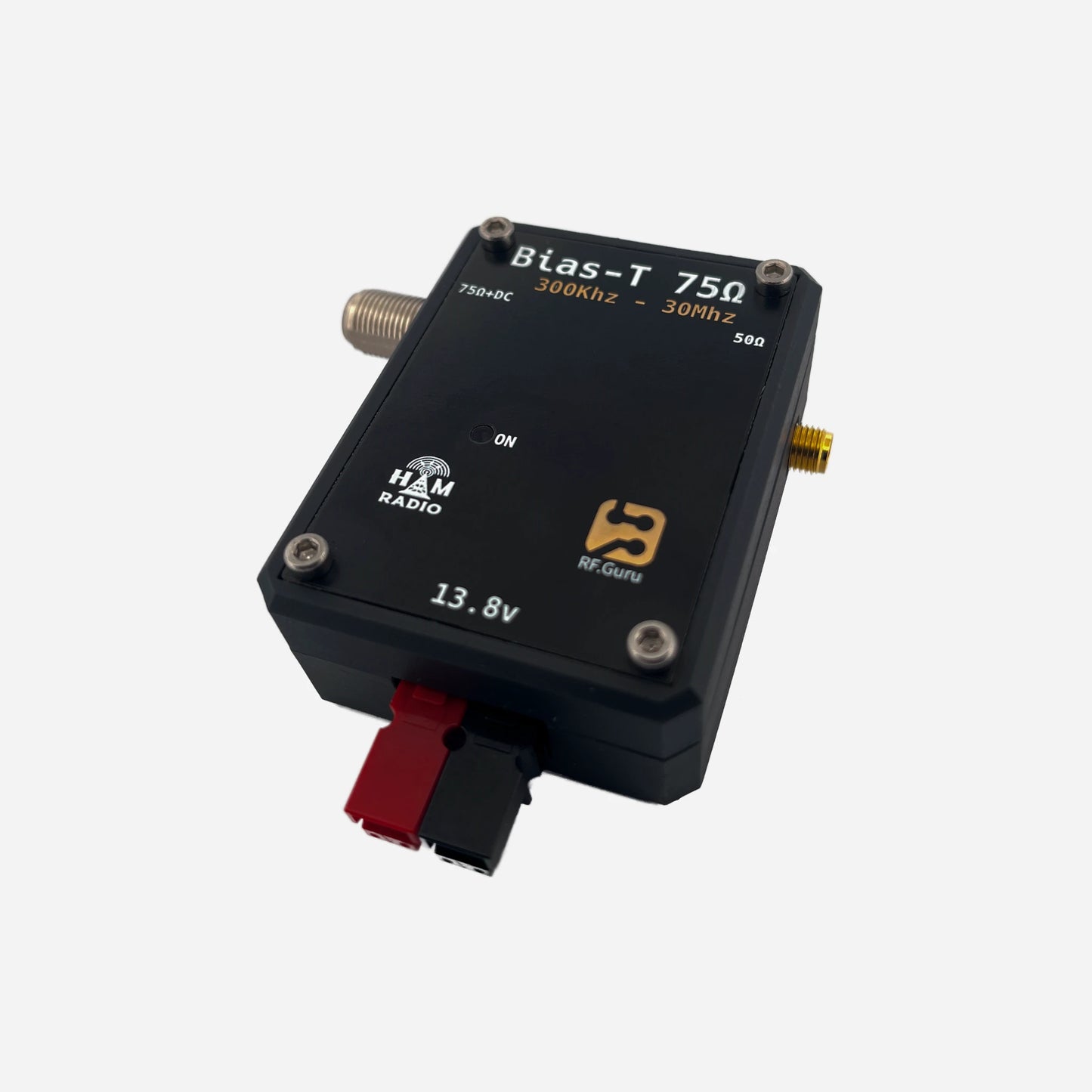
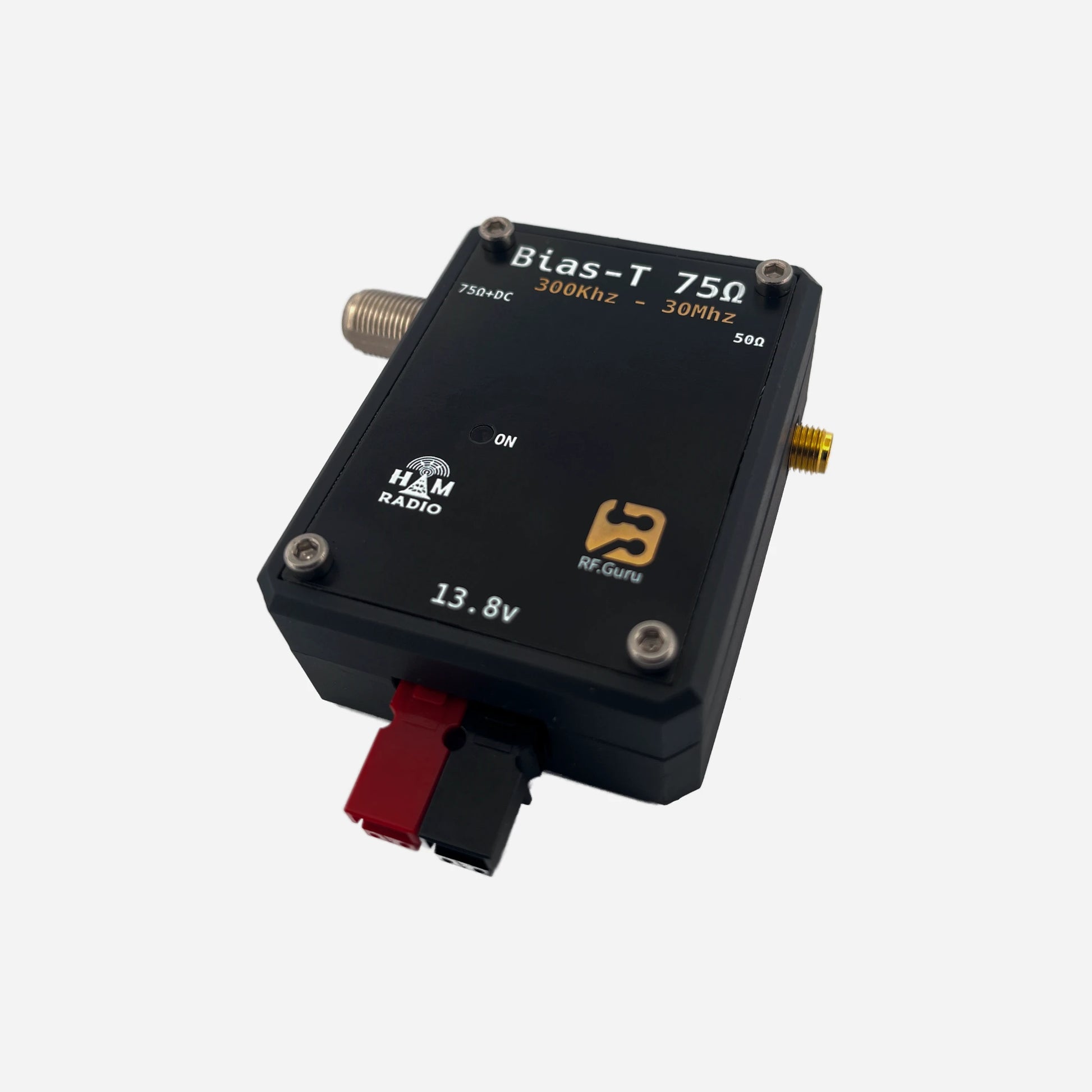
Our RF.Guru Bias-T family lets you feed DC power over coax to an active receive antenna, LNA, or preamp while keeping your receiver port DC-free. These Bias-T units are designed around a practical real-world setup: 75 Ω coax + F-connectors on the feedline/antenna side, with a clean 50 Ω SMA output toward your SDR/receiver.
• The coax port to the antenna carries RF + DC on the same cable.
• The receiver port passes RF only (DC is blocked).
• The power port injects DC through a filtered feed so your supply noise doesn’t ride along as “fake RF”. Tip: A Bias-T is for receive chains. Do not transmit through it.
Choose Your Bias-T Model
We offer three ranges. Pick the one that matches your highest frequency needs (and your lowest frequency needs).
| Model | Frequency Range | Best For | Key Note |
|---|---|---|---|
| Bias-T 200 | 10 kHz → 200 MHz | VLF/HF + VHF (160 m through 2 m) | Uses a 75→50 Ω resistive pad with 200 MHz max. |
| Bias-T 600 | 500 kHz → 600 MHz | LF/HF + VHF + UHF scanning (up to 2m and beyond) | Discrete wideband Bias-T network + 75→50 Ω transformer. |
| Bias-T 1500 | 20 MHz → 1.5 GHz | VHF/UHF/L-band (incl. 70 cm, 23 cm, ADS-B @ 1090 MHz) | Starts at 20 MHz (not for LF/HF below that). |
Connectors & Typical Wiring
- Coax to antenna (RF + DC): F-connector (75 Ω)
- Receiver output (RF only): SMA female (50 Ω)
- DC input: Powerpole (typical ham shack 13.8 V supply)
1) Connect your 13.8 V DC supply to the Bias-T power input.
2) Run 75 Ω coax from the Bias-T F-port to the active antenna/LNA.
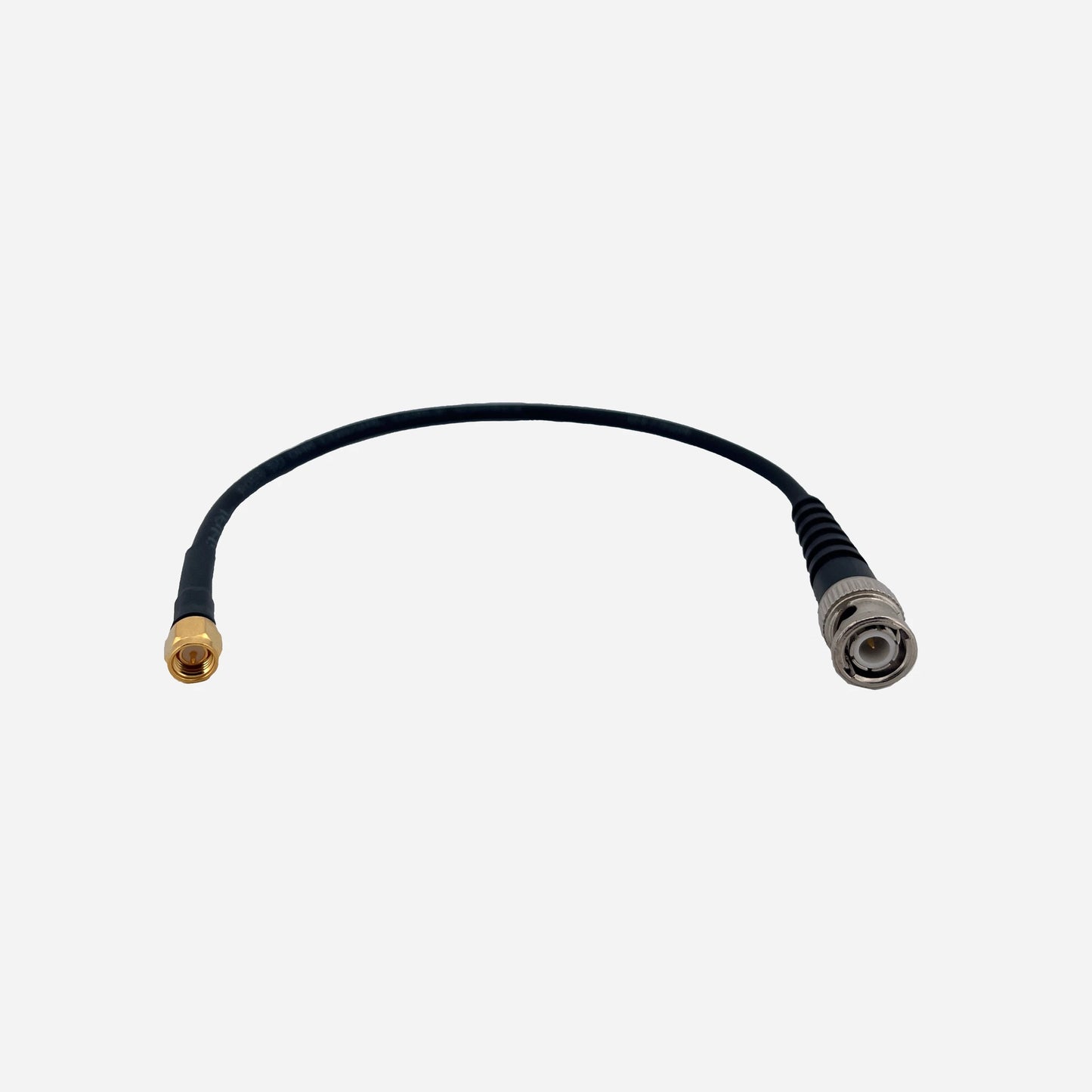
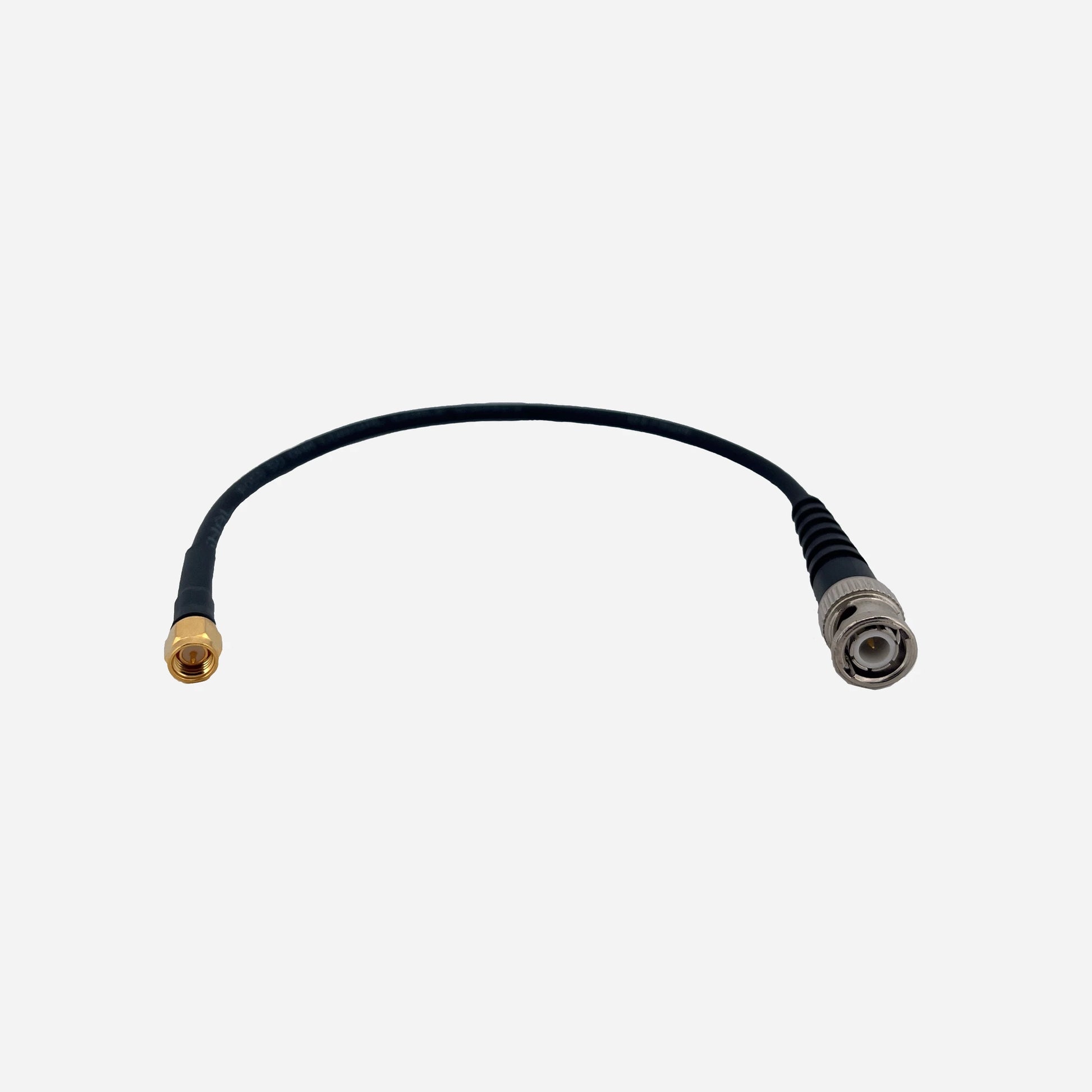
3) Use a short jumper from the Bias-T SMA output to your SDR/receiver.
For best noise performance: keep DC leads short and add a clip-on ferrite on the DC cable near the Bias-T.
Why 75 Ω on the feedline/antenna Side?
In receive systems, 75 Ω coax is often the best value: low loss at VHF/UHF, good shielding, and easy outdoor connectorization with F-connectors. Your receiver is typically 50 Ω, so we use a 75→50 Ω transformer on the RF output to keep the interface clean and predictable.
Noise & Protection Done Right
- Multi-stage DC filtering: a filtered DC feed reduces the chance that your power supply noise becomes “RF”.
- Reverse-polarity protection and a resettable fuse help avoid “oops” moments in the shack.
- Static bleed / ESD handling: the coax line includes a high-value discharge path and clamping elements to reduce static build-up.
A Bias-T is not a lightning arrestor. Use proper grounding and surge protection practices for outdoor installations.
Model Details
Bias-T 30 (10 kHz → 200 MHz)
The go-to option for VLF/HF/VHF receive. This model uses a 75→50 Ω resistive pad that is intentionally limited to 200 MHz, which keeps performance solid where it matters for VLF/HF work.
• 10 kHz–200 MHz (LF/HF/VHF SDR work, wideband active antennas)
• HF through 2 m receive coverage
Bias-T 600 (500 kHz → 600 MHz)
Our wideband “do-most-things” Bias-T: it covers LF through UHF while keeping the DC feed clean through a discrete multi-stage network. It’s ideal for active antennas like EchoTracer-class E-probes that are used from HF up into VHF/UHF monitoring.
Bias-T 1500 (20 MHz → 1.5 GHz)
Built for higher-frequency receive chains where layout parasitics matter: VHF/UHF and L-band scanning, including 23 cm and ADS-B (1090 MHz). This model starts at 20 MHz, so it’s not intended for LF/HF work below that threshold.
Included
- RF.Guru Bias-T (selected model)
- Powerpole DC input with power LED
- F-connector antenna port (RF + DC over 75 Ω coax)
- SMA female receiver port (RF only, 50 Ω)
- Short SMA-to-BNC jumper
- 1 meter long 13.8 V DC power cable with Powerpole connectors
Specs at a Glance
| Parameter | Value |
|---|---|
| Available Frequency Ranges | 10 kHz–200 MHz / 500 kHz–600 MHz / 20 MHz–1.5 GHz |
| Antenna/Coax Port | F-connector (75 Ω, RF + DC) |
| Receiver Port | SMA female (50 Ω, RF only) |
| DC Input | Powerpole (typical 13.8 V shack supply) |
| Protection | Reverse polarity + resettable fuse + static/ESD handling |
Power your device within its rated voltage/current. If you’re feeding a 5 V LNA, use a regulated 5 V supply; if you’re feeding ham-grade active antennas, 13.8 V is typical.
Mini-FAQ
- Can I transmit through this Bias-T? ... No. These are intended for receive chains (active RX antennas / LNAs / SDR setups).
- Which model should I pick? ... Choose based on your highest and lowest frequency needs: HF-focused = Bias-T 200, wideband to VHF = Bias-T 600, VHF/UHF/L-band = Bias-T 1500.
- Do I have to use 75 Ω coax? ... It’s recommended for cost and loss, but many receive setups will still work fine with 50 Ω coax. The receiver side remains 50 Ω on SMA.
- Will a noisy power supply ruin my receive noise floor? ... It can. We add multi-stage filtering, but a very noisy supply can still leak in. Use a decent supply and add a ferrite on the DC lead.
- Is this lightning protection? ... No. Use proper grounding and surge protection for outdoor coax runs.
Interested in more technical content? Subscribe to our updates for deep-dive RF articles and lab notes.
Questions or experiences to share? Feel free to contact RF.Guru about Bias-T selection and installation.
Share