RF Guru
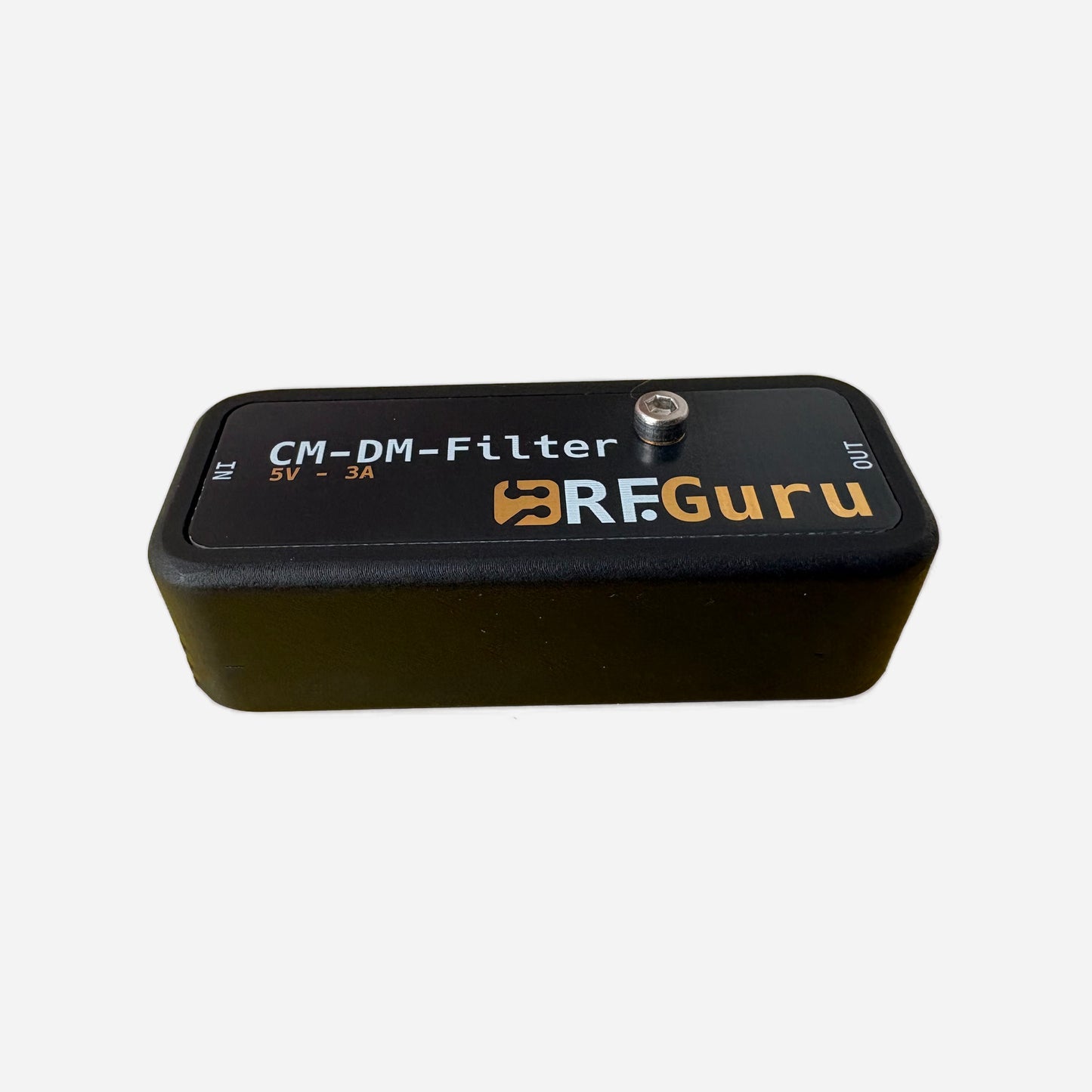
Ultra-Low-Noise Isolating 5V USB-C to 5V USB-A Transformer
Ultra-Low-Noise Isolating 5V USB-C to 5V USB-A Transformer
Couldn't load pickup availability
(Note: this is RF/EMI isolation and power-path filtering. It is not safety-rated galvanic isolation like a transformer-isolated DC/DC converter.)
If you don’t have HF receivers or SDRs nearby (no weak-signal RX sensitivity concerns), a basic Raspberry Pi 15 W USB-C power supply is typically sufficient for everyday hotspot use.
Key Features
- Inline USB power isolation (EMI): multi-stage filtering to suppress conducted RF hash on the 5 V line.
- Transient protection: clamps fast spikes and ESD-like events before they reach your load.
- Common-mode + differential suppression: reduces both “between the wires” noise and noise riding on both conductors together.
- Shield bleed control: prevents a floating shield from charging up while avoiding a hard ground bond that can re-inject noise.
- Built for RF environments: intended for hotspots, SDRs, and receiver-adjacent USB loads where power noise turns into spurs and raised noise floor.
Recommended Use Cases
Ideal for powering noise-sensitive USB loads such as:
- VHF/UHF hotspots and digital voice nodes
- USB SDR receivers and RF front-ends
- Single-board computers used near antennas and receivers
- USB-powered RF accessories (filters, small controllers, bias-T modules powered from USB, etc.)
How It Works
The adapter uses several isolation “layers” in series. Each layer targets a different noise mechanism, so the overall result is stronger than any single filter stage.
- Input surge clamp + local decoupling: fast transients on the incoming 5 V rail are clamped, and a local capacitor network provides a low-impedance reservoir for short current spikes.
- High-frequency impedance step: a small series impedance element adds strong attenuation at RF, stopping “digital edge” energy from traveling down the cable.
- Common-mode choke on power + return: noise that rides on both conductors together (a classic source of wideband RFI) is strongly impeded without harming normal DC delivery.
- Differential low-pass smoothing: a series energy-storage element plus local bulk and high-frequency bypass capacitors form an effective low-pass stage for ripple and switching artifacts.
- Feedthrough-style isolation at the output: an additional filter stage is placed close to the USB output so residual noise is shunted locally instead of being exported to your device and its ground reference.
- Controlled shield “bleed” network: the USB connector shield is referenced through a controlled path to avoid static build-up and reduce ESD sensitivity, but without creating a direct shield-to-ground bond that can form a noise loop.
(Practical note: this design focuses on power-path cleanliness. If your interference is primarily radiated pickup on long cables, adding cable management and ferrites can still help.)
Installation Tips
- Place it at the noisy source: install the adapter as close as possible to the USB power source (charger, DC-DC, hub, or power bank) to stop noise early.
- Keep the downstream lead short: shorter cables after the adapter reduce the chance of re-radiation and re-coupling.
- Avoid stacking grounds: if your device is already bonded to station ground via other cables, let the adapter do its job and avoid adding extra shield bonds “just because.”
Technical Specifications
- Input: USB-C (5 V power)
- Output: USB Type-A (Female), filtered 5 V power
- Purpose: conducted-noise suppression + EMI isolation on the USB power path
- Shield handling: controlled bleed reference (reduces static/ESD issues without a hard bond)
(If you plan to use a USB-C power source that only delivers power after USB-PD negotiation, use a source that provides default 5 V output or a proper PD trigger upstream.)
Share